In the three day workshop ‘(in)visible traces’ with BA students from Designschule Munich, we explored the unnoticed details of our surroundings. The small marks, patterns, and traces left behind by time, people, and nature. Often overlooked in daily life, these elements tell quiet stories and shape the way we experience the world. Through observation, collection, and creative transformation, students found new ways to bring these hidden traces to life. Whether through photography, sketches, textures, or animation, they turned the invisible into something meaningful. Something others could see, connect with, and be inspired by.
This workshop was about more than just creating; it was about paying closer attention, discovering new perspectives, and finding inspiration in unexpected places. Noticing what often goes unseen can transform the way we design, think, and engage with our surroundings. It was also an exploration of storytelling and purpose, challenging us to consider our role as designers. At its core, the workshop asked a deeper question:
What trace do you want to leave behind as a designer?
What trace do you want to leave behind as a designer?
Facilitating the three-day workshop with bachelor students in Munich was both a rewarding and insightful experience. It provided an opportunity not only to guide students through a creative exploration of “traces” but also to reflect on the dynamics of teaching, engagement, and the role of intuition in design.
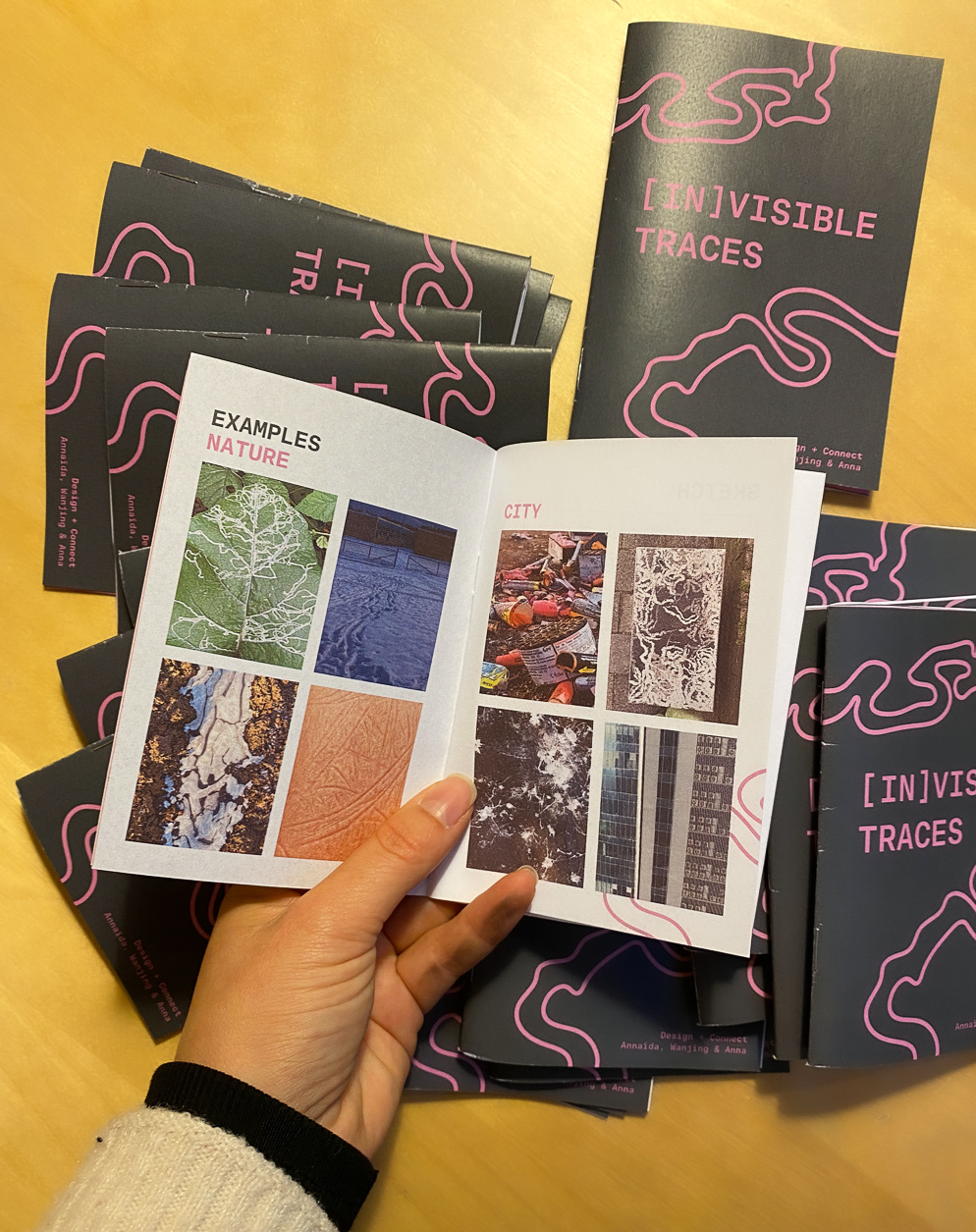
In the weeks before the workshop, we curated the schedule and made an inspirational booklet that the students could hold onto if they felt lost.
The approach was to change perspectives (From nature-city to human/non-human. We are one) and give them a new way to get inspired through the topic ‘traces’ and trusting in the creative process.
In the end, we wanted to connect and collaborate with the students and not only tell them what to do. Our slogan for this workshop was ‘expect the unexpected’.
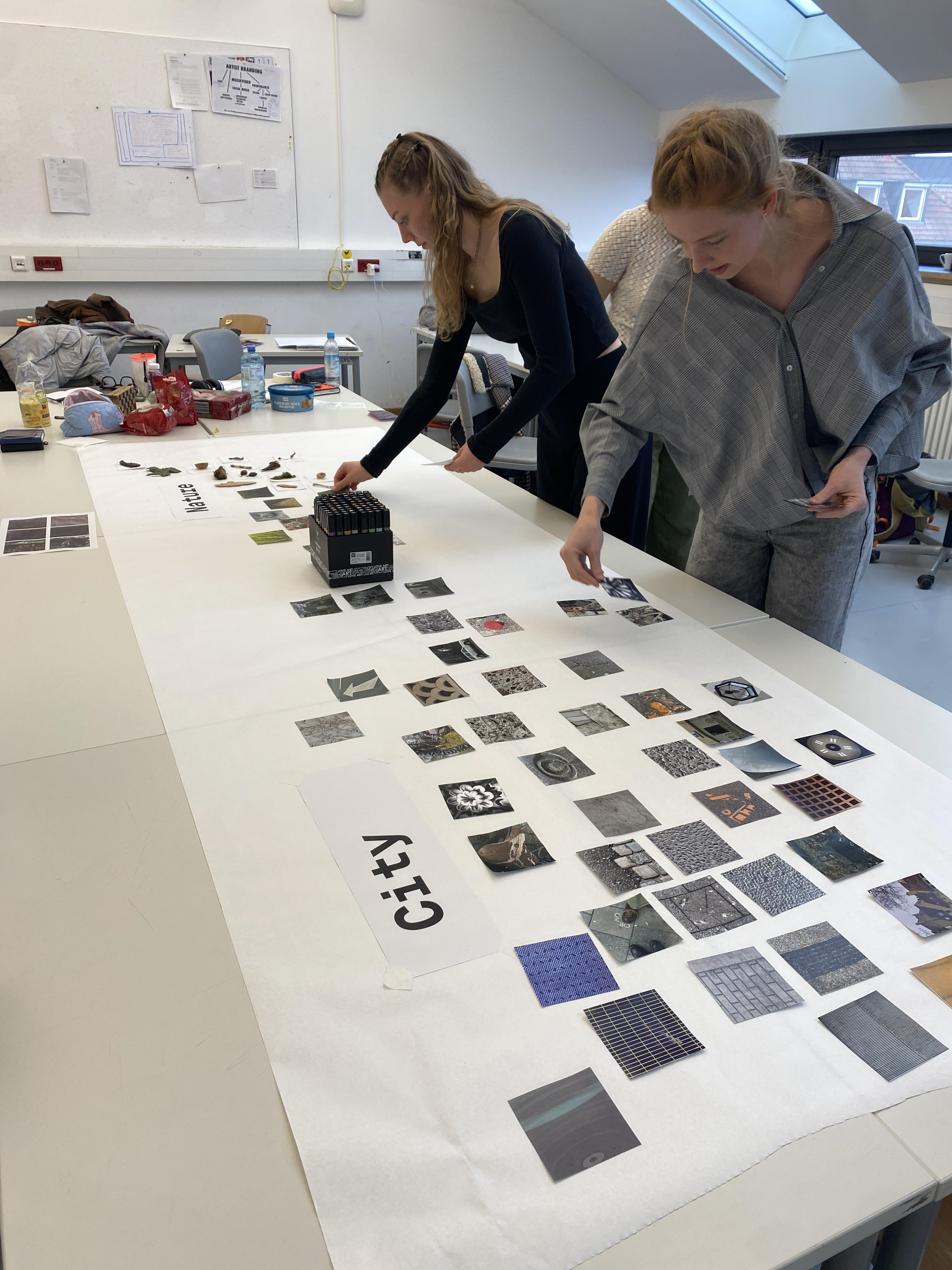
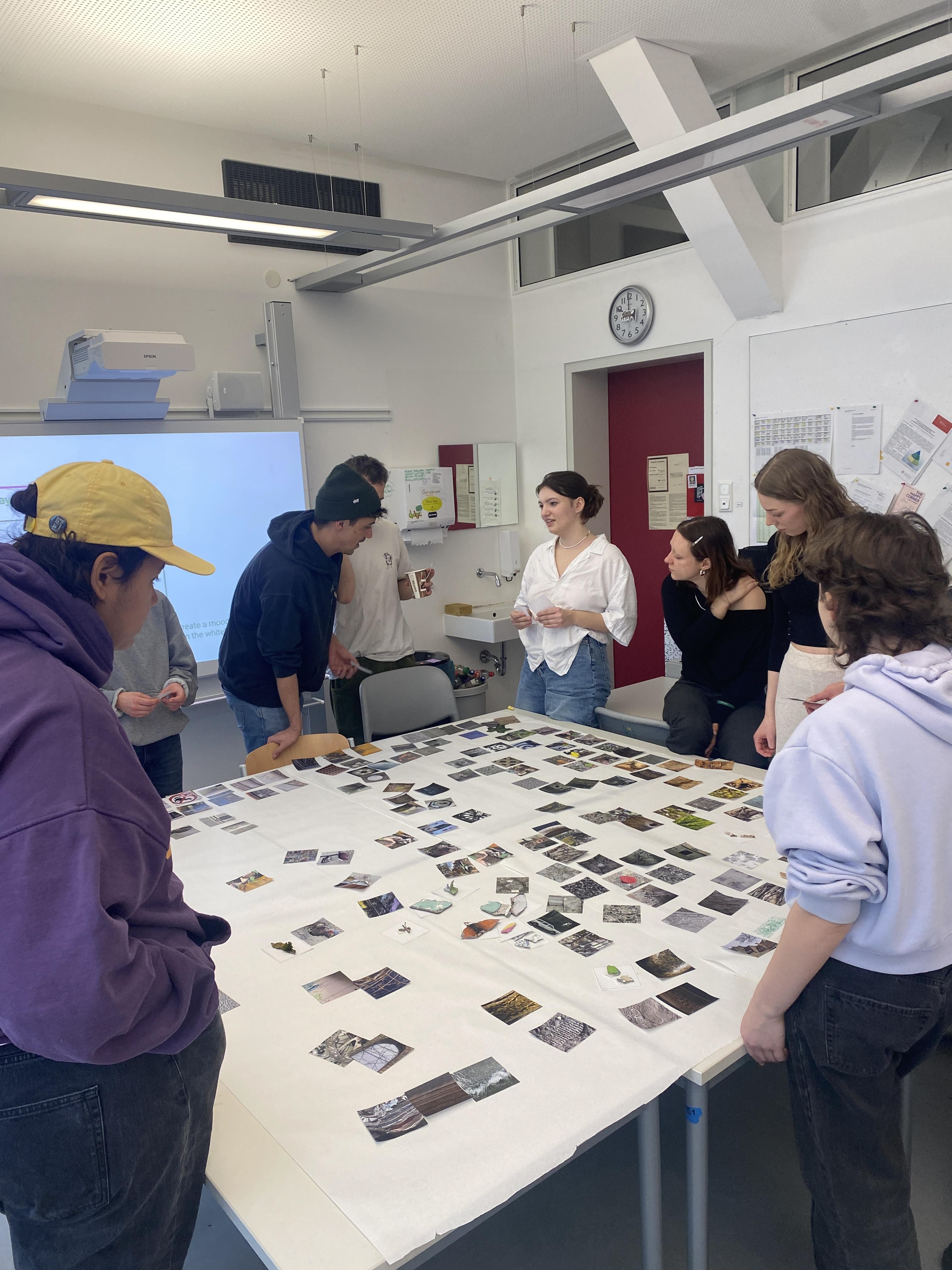
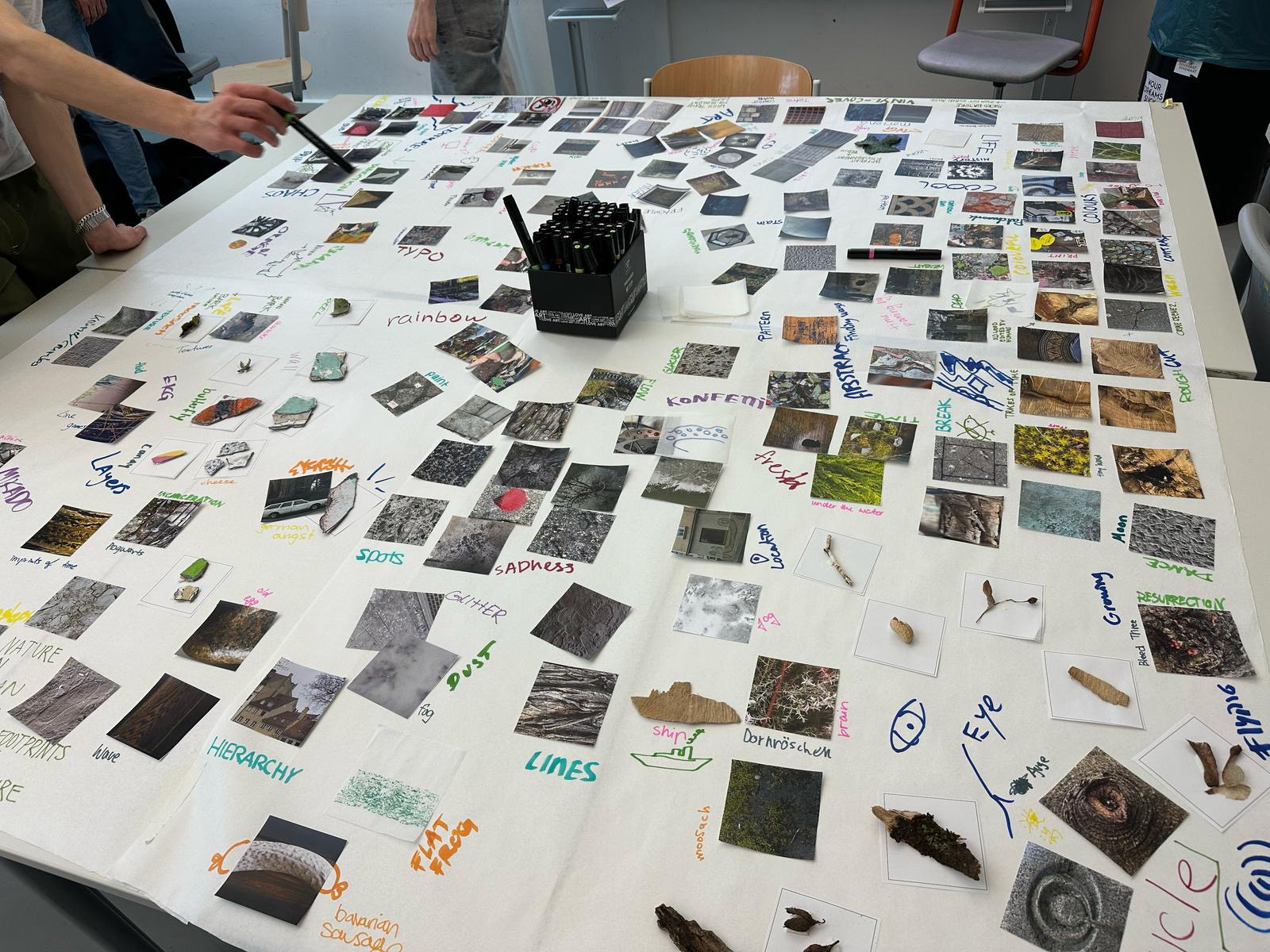
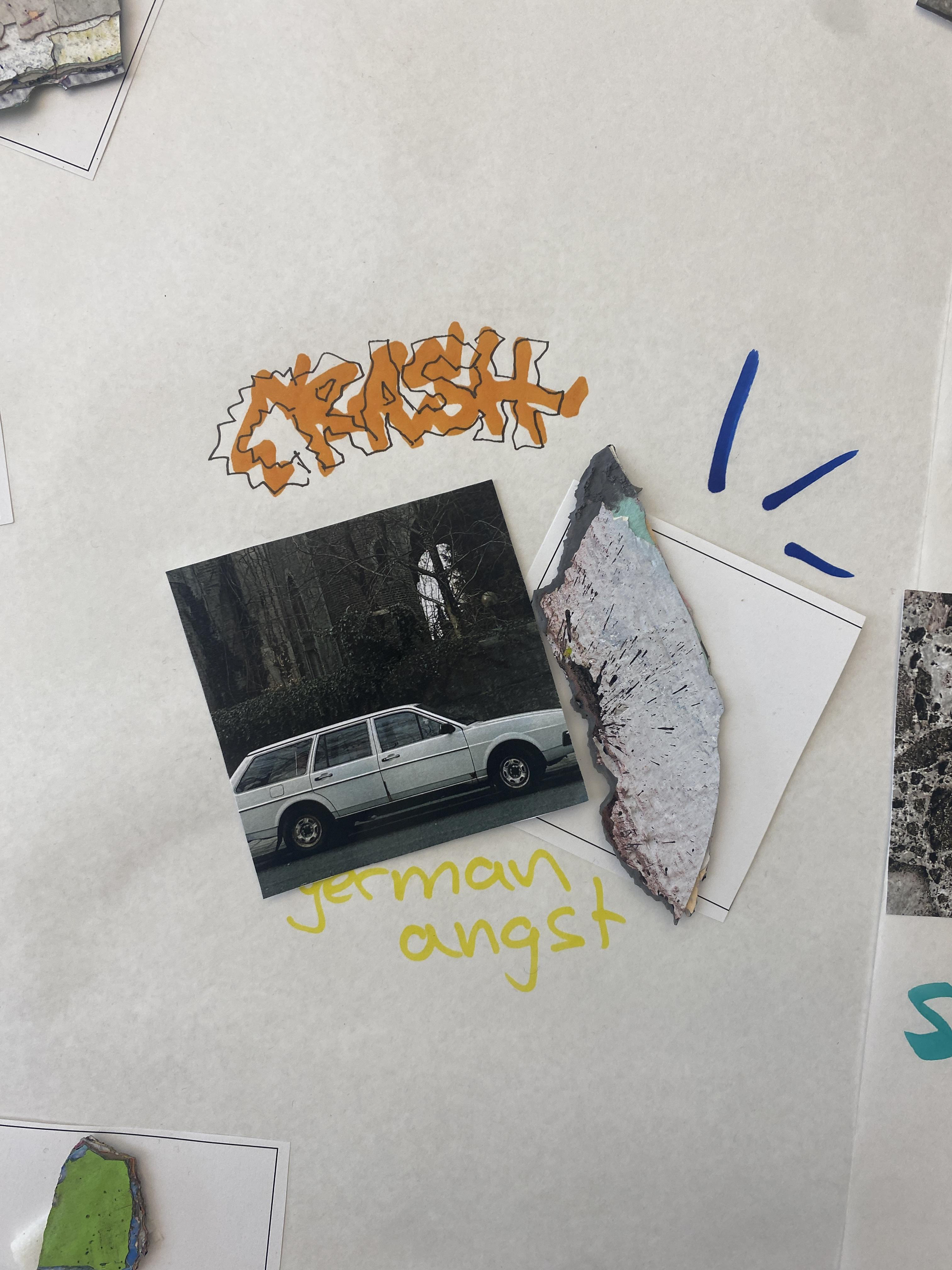
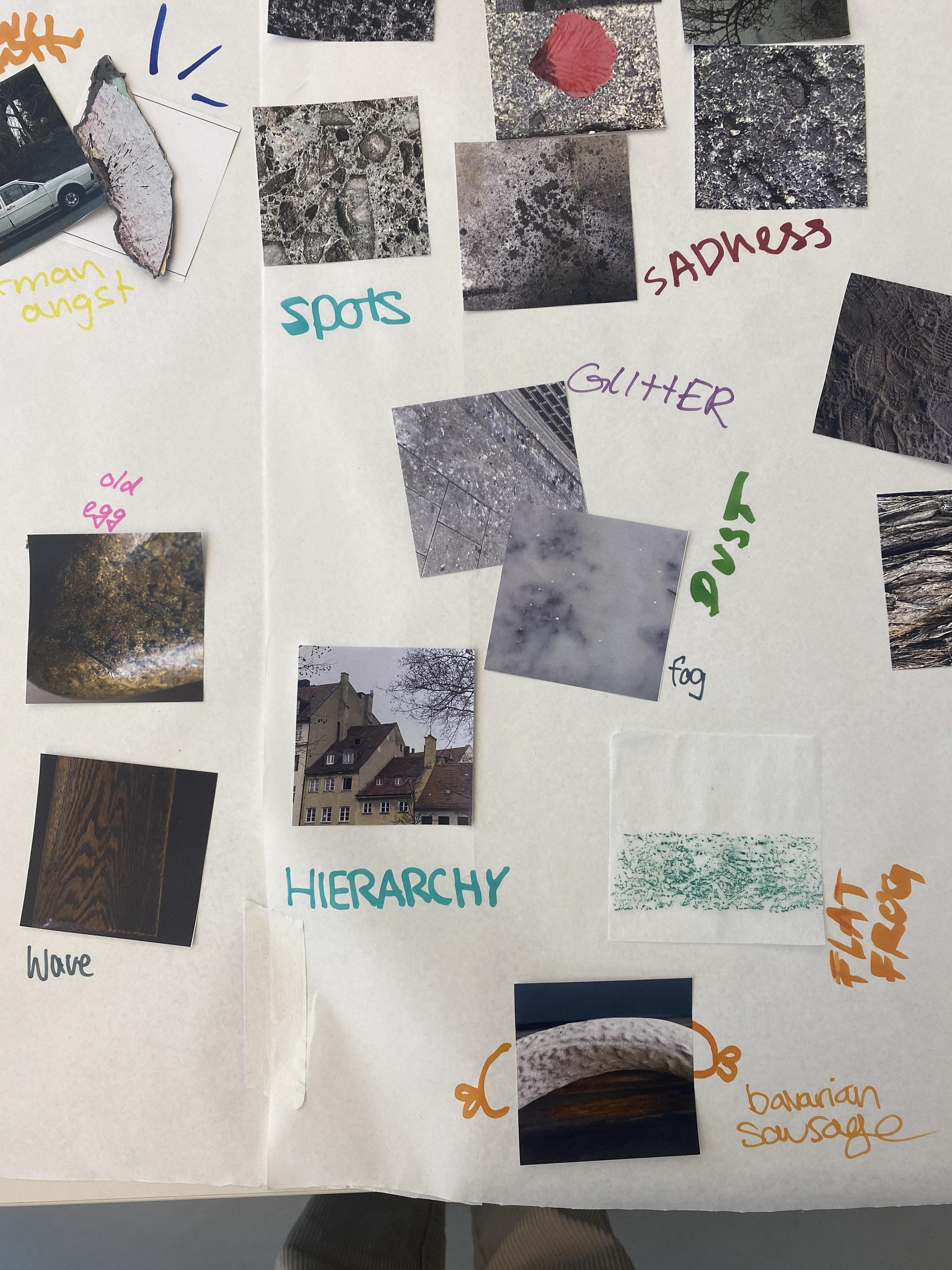
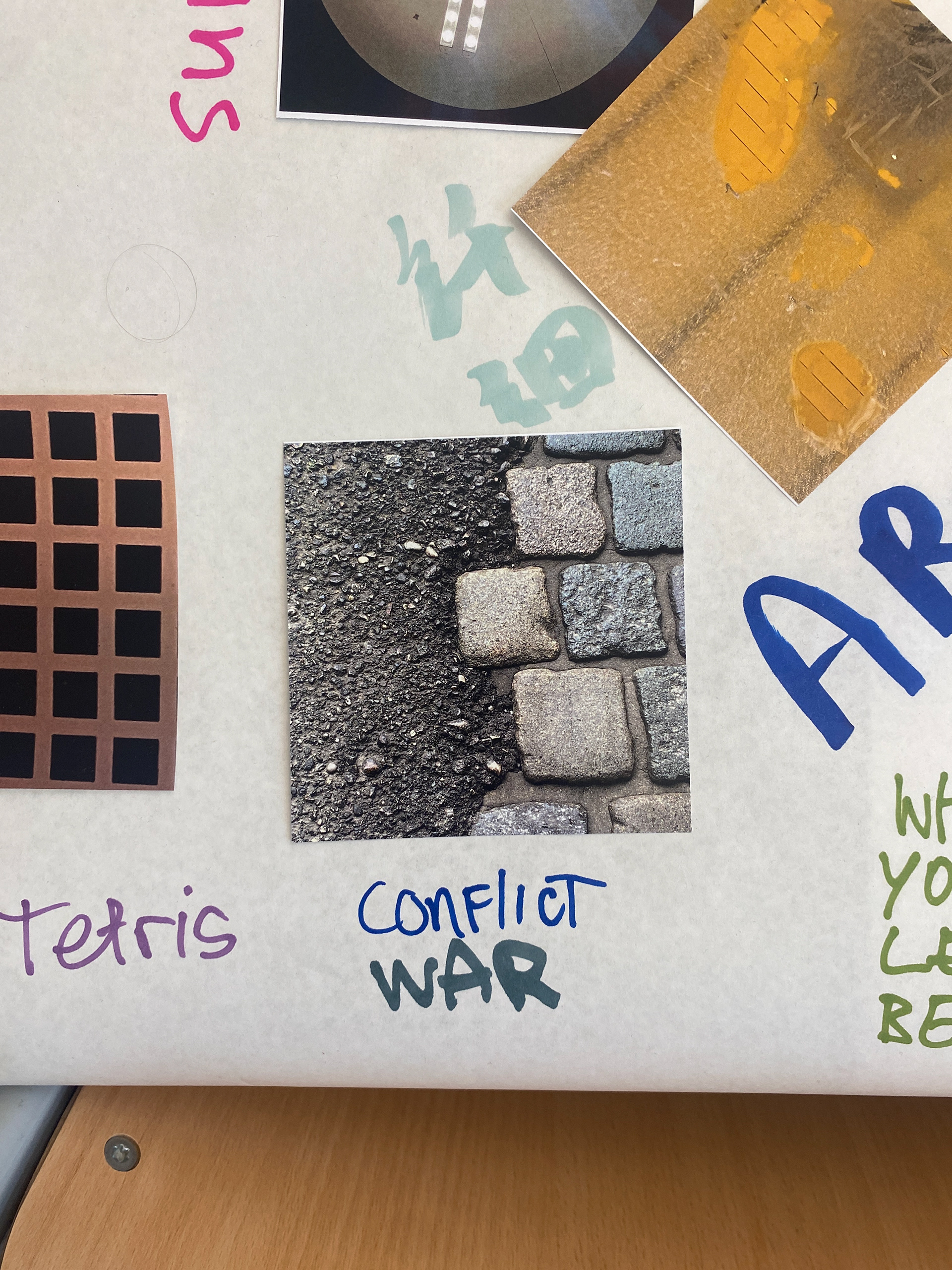
Collecting - Connecting - Reflecting - Making
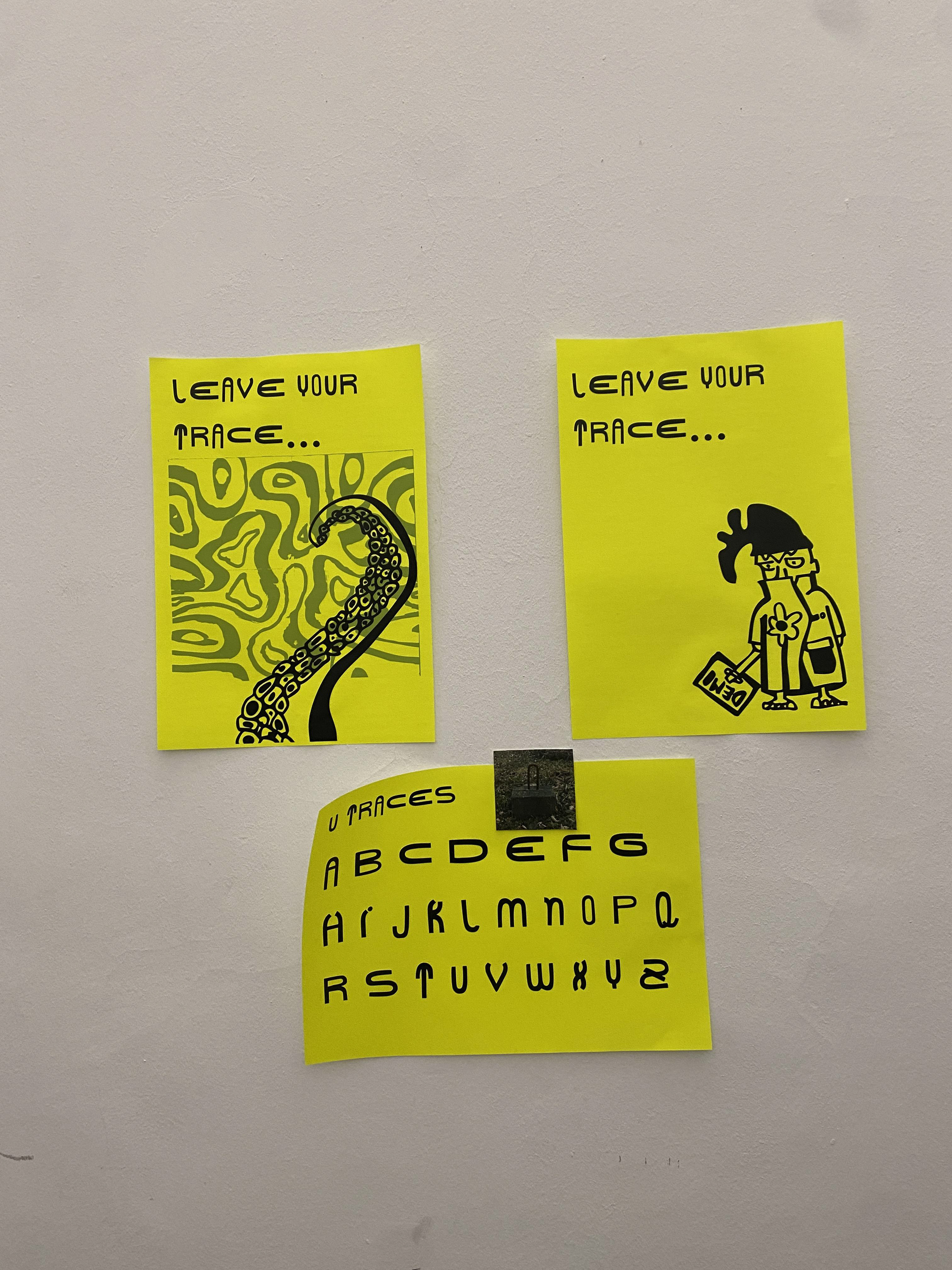
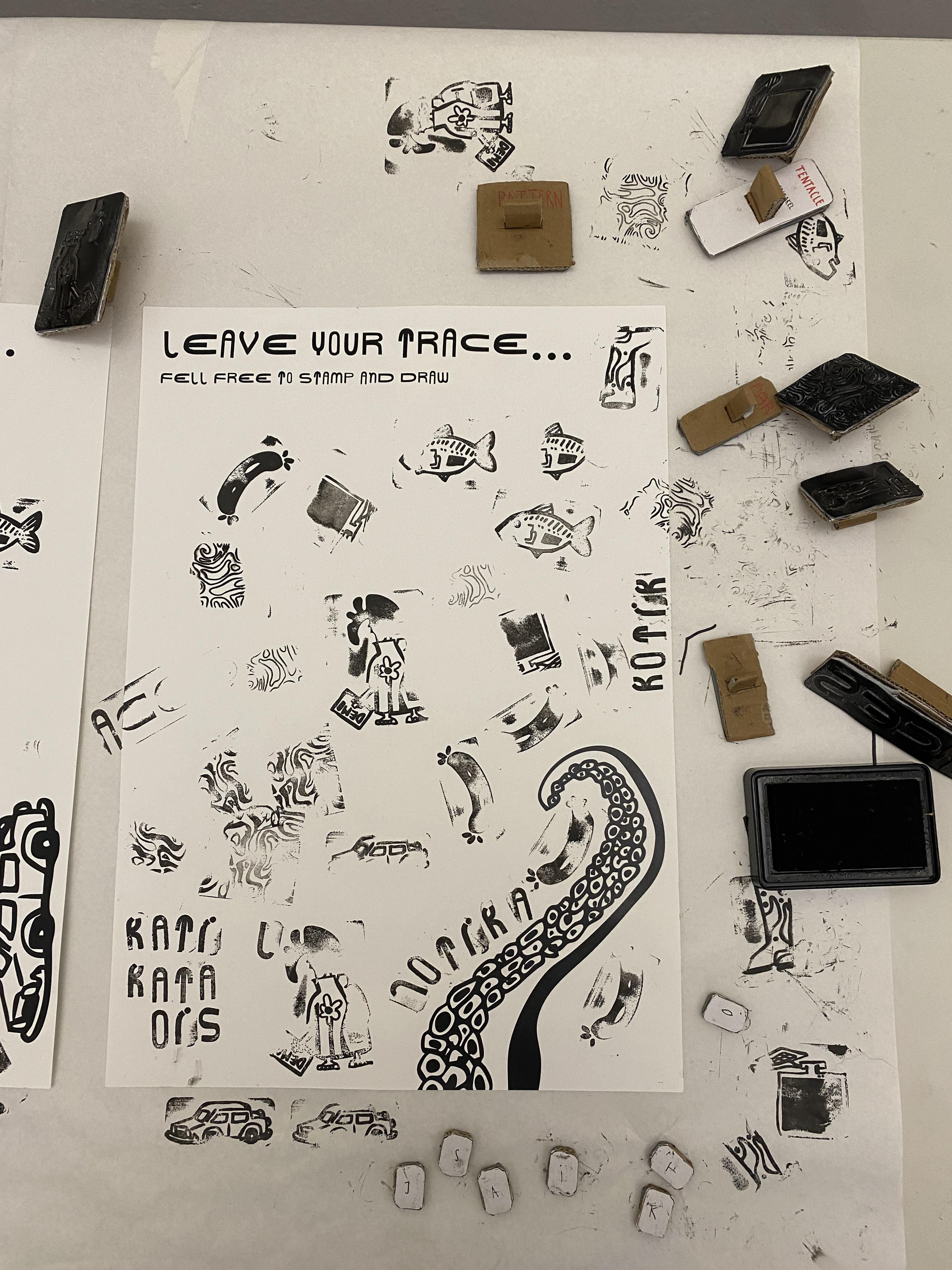
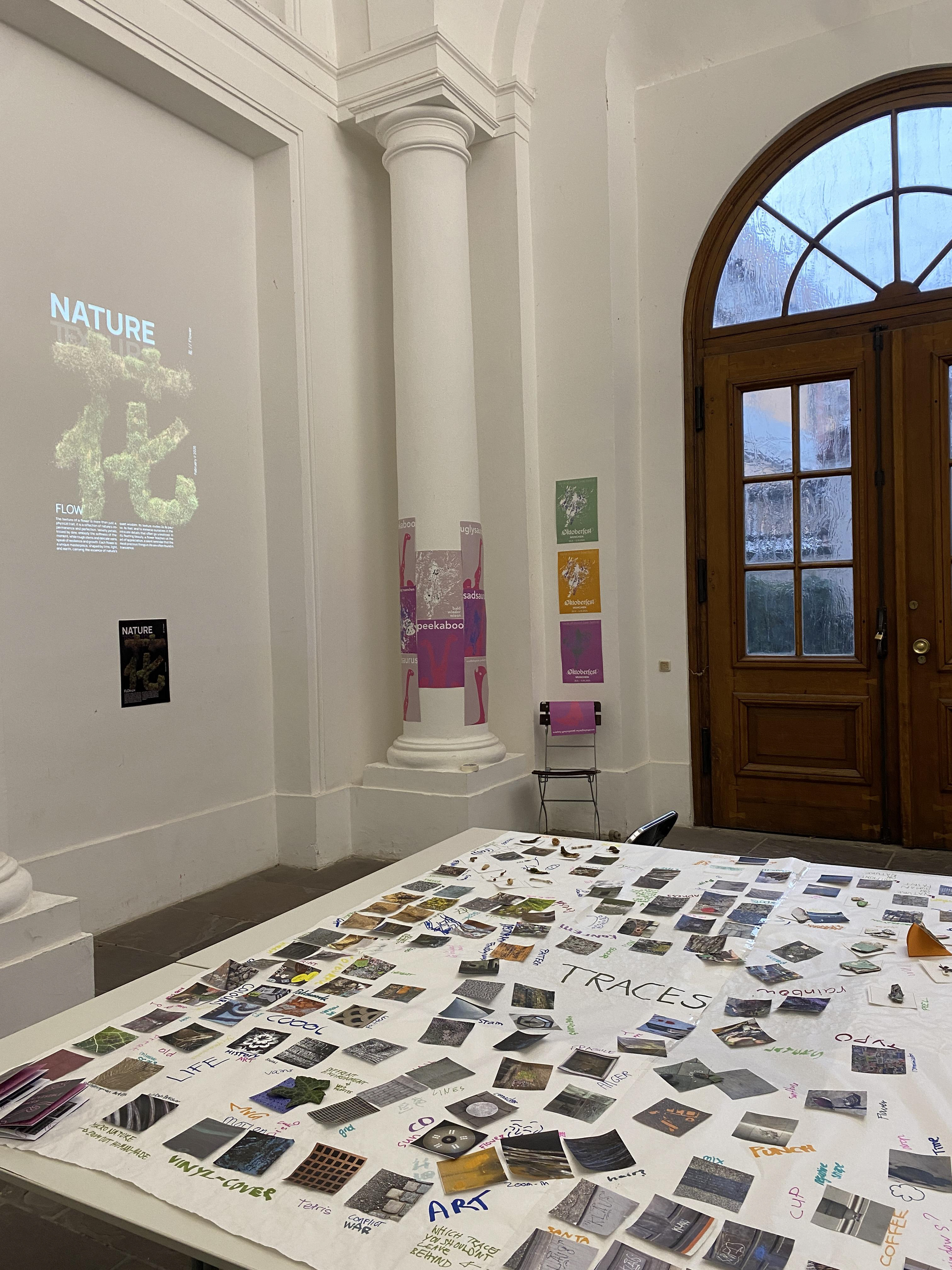
One of the most rewarding aspects of this workshop was seeing the variety of outcomes that emerged. Our open, intuitive approach encouraged students to explore freely, resulting in a diverse range of creative works. Some experimented with animation fragments that played with shape and perception, while others created moving images with rich textures. There was even a font developed from collected traces and stamps made from abstract forms visualized on the collective mapping.
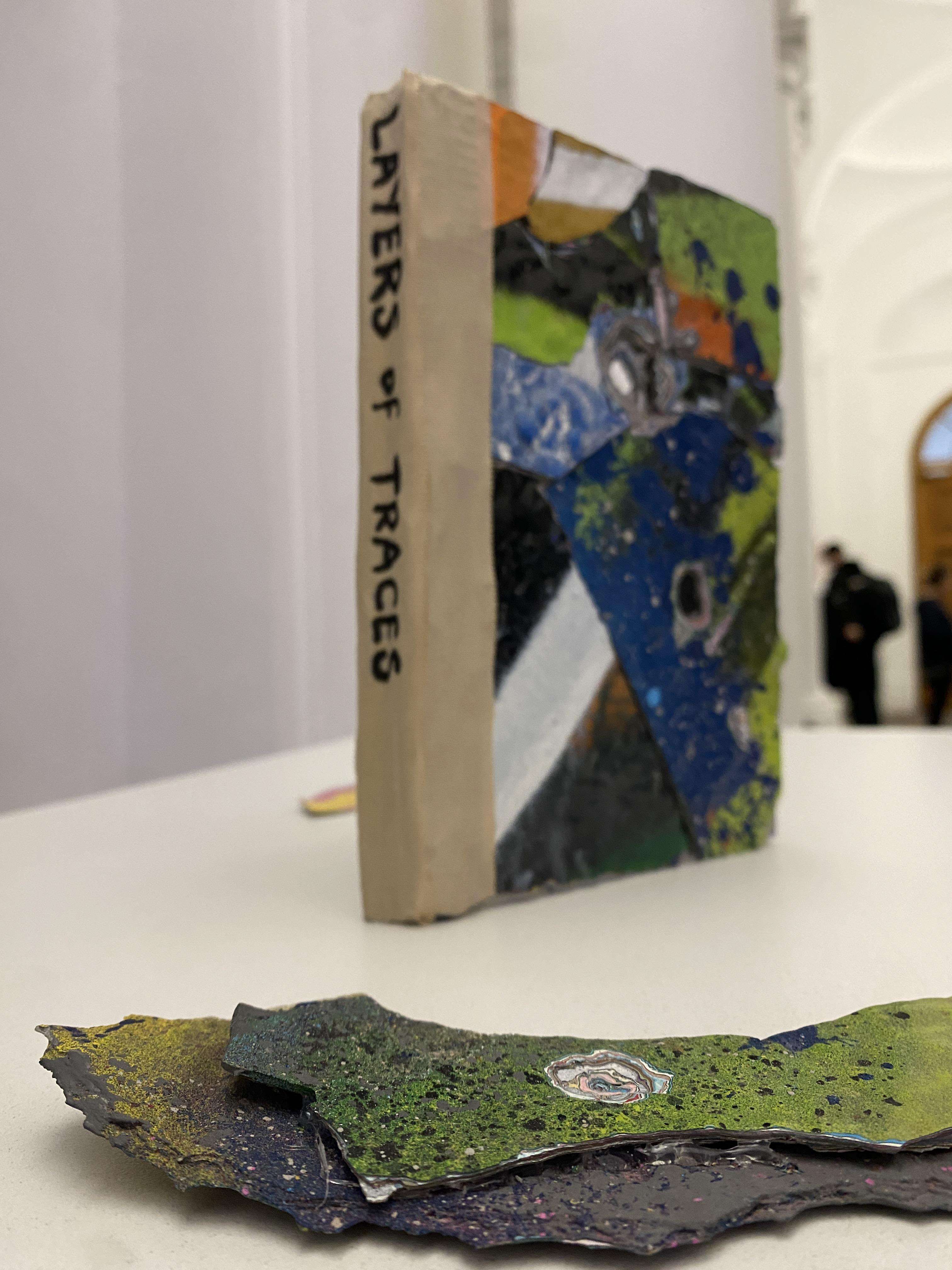
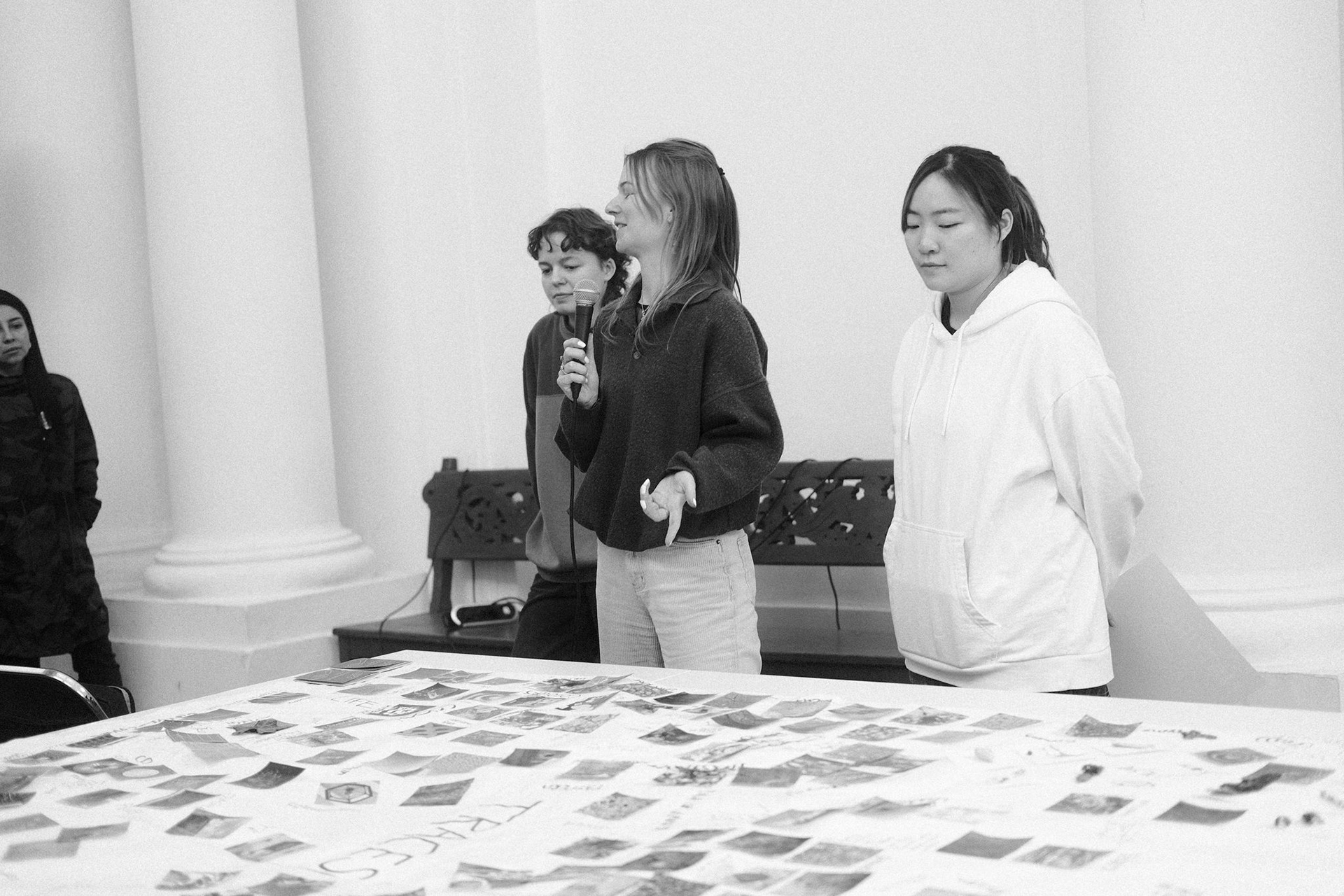
This workshop made me realize how much I enjoy working with people and how important connection and conversation are to me.
Engaging with the students, exchanging ideas, and discussing creative processes gave me energy and inspiration.
Engaging with the students, exchanging ideas, and discussing creative processes gave me energy and inspiration.
At the same time, I recognize that this workshop took place in a carefully curated teaching environment. Different settings, cultures, and educational approaches can create very different dynamics. As a Dutch person, I am used to direct feedback and openness, whereas in Munich, I noticed a more structured and disciplined teaching style. However, this contrast became an opportunity for mutual learning. The students gained a fresh perspective from me, and I, in turn, learned from their structured approach.